Foraging New Zealand: Mamaku Fern

Native New Zealand edible plants: The Mamaku Fern. Original illustration by Mamakan.
Welcome to the first entry in our new foraging series, where we take a deep dive into the edible and medicinal wild flora of Aotearoa New Zealand.
Today, we’re venturing into the damp, shadowy understory of the native bush to explore Cyathea medullaris, the magnificent Mamaku black tree fern.
Rising up to 20 metres into the forest canopy, this ancient giant has long held a revered place in traditional rongoā Māori. Now, modern chefs, foragers, and wellness practitioners are rediscovering its unique interplay of hydration, distinct texture, and wild nutrition.
Disclaimer: This content is for educational purposes only and does not constitute medical or botanical advice.
The Mucilage: Nature’s Hydrating Gel
Slice into a mature frond stem and peel back its bristly outer layer, and you’ll immediately discover a clear, remarkably viscous gel. Rich in complex polysaccharides, this soothing mucilage is what we fondly call "vegan caviar."
Beyond its intriguing texture, the mucilage has been historically valued for its ability to soothe internal membranes. When consumed, it forms a gentle, protective layer along the digestive tract, offering foundational support for gut health and overall digestion.
The Inner Pith: Flavour & Texture
At the very heart of the stem lies a dense, ivory-colored core. Raw, the inner pith presents a fascinating textural duality:
Texture: Crisp yet slightly gelatinous, offering a clean, firm bite similar to a water chestnut or fresh bamboo shoot.
Flavour Profile: Subtly earthy and exceptionally clean, carrying delicate notes of wild field mushroom and crisp green apple.
In the Kitchen: Preparation & Preservation
Because the pith is naturally mild, it takes brilliantly to simple culinary techniques that either lock in its crunch or concentrate its nutrients.
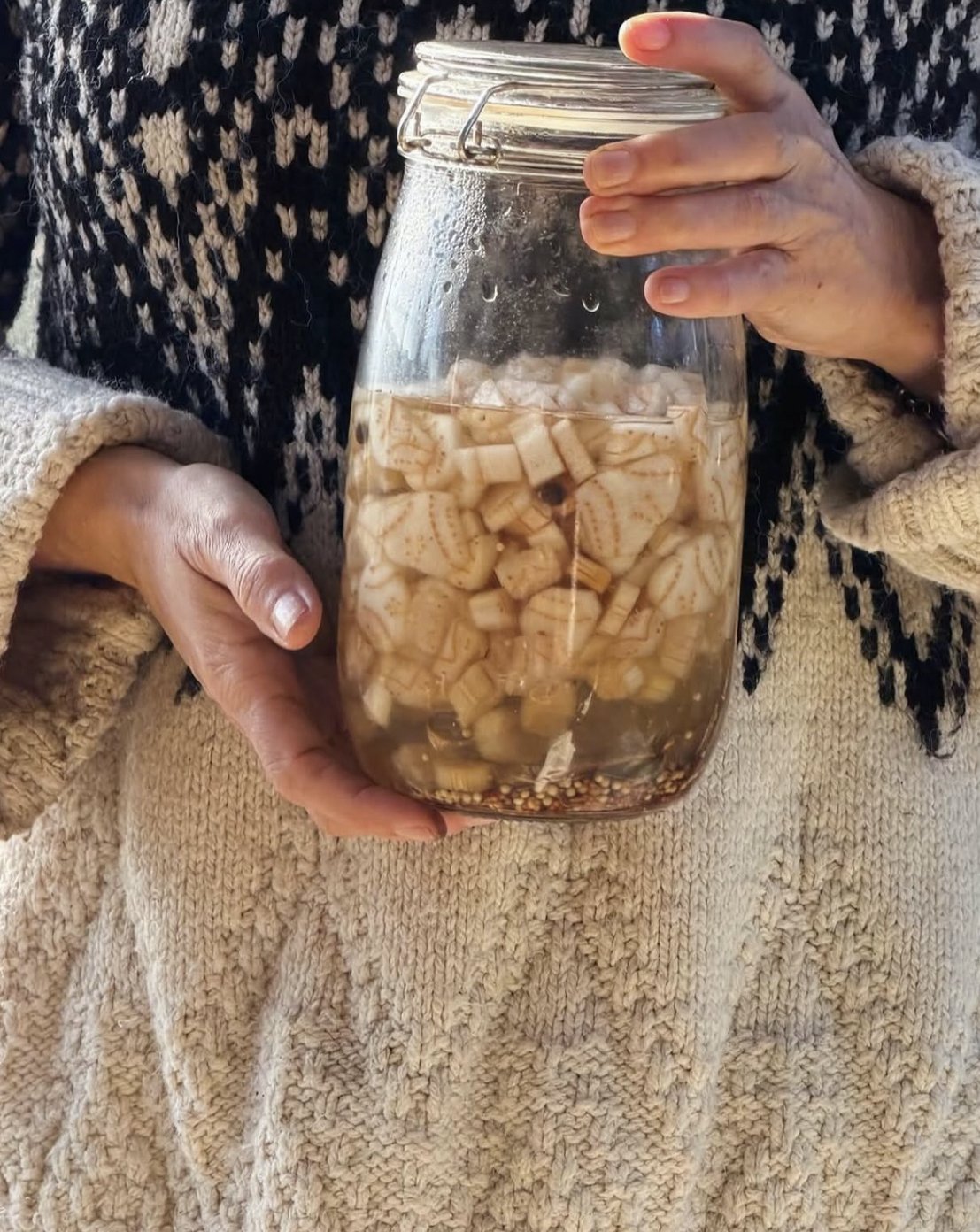
Pickled Mamaku Fern by Velskov is a great way to enjoy an iconic forest treat.
GastroGeography Recipe: Pickled Mamaku Fern by Velskov
The pith absorbs bright, acidic brines effortlessly while keeping its signature structural crunch.
Day 1
Harvest: Harvest a frond by cutting it from the base where it meets the trunk. (Just take one frond per fern and leave it to regenerate with at least 3 new untouched fronds in between harvests).
Prep: Pare away the dark outer skin thoroughly and cut the white inner pith into uniform, bite-sized cubes.
Salt: Cover the cubes with salt and refrigerate for a day or two.
Day 2
Rinse: Rinse the cubes in cold water to remove the salt.
Brine: Combine equal parts white wine, apple cider or honeycomb vinegar, and water in a saucepan. Add sea salt, sugar or honey, black peppercorns, mustard seeds, chilli, and other herbs that you like. Bring it all to a simmer.
Cure: Pack the raw pith into sterilised glass jars, submerge in the warm brine, and seal tightly. Rest for several days to let the flavours integrate.
Serve: Use these sharp, textured cubes as a vibrant accent on charcuterie boards, alongside smoked fish, or tossed through a fresh, spicy fruit salsa.
GastroGeography Recipe: Mamaku Fern Pith Fibre Powder
A shelf-stable, nutrient-dense pantry essential for everyday nourishment.
Harvest: Harvest a frond by cutting it from the base where it meets the trunk. (Just take one frond per fern and leave it to regenerate with at least 3 new untouched fronds in between harvests).
Prep: Pare away the dark outer skin thoroughly and cut the white inner pith into uniform, bite-sized cubes.
Dry: Slice the raw pith as thinly as possible. Arrange the slices on dehydrator trays (or a low-temperature oven set to 50°C) until completely brittle.
Grind: Pulse the dried pieces in a spice grinder until reduced to a fine, soluble powder.
Use: Whisk a spoon of powder into wild game reductions, rich winter soups, or your morning green smoothie as a natural thickener and dietary fibre boost.
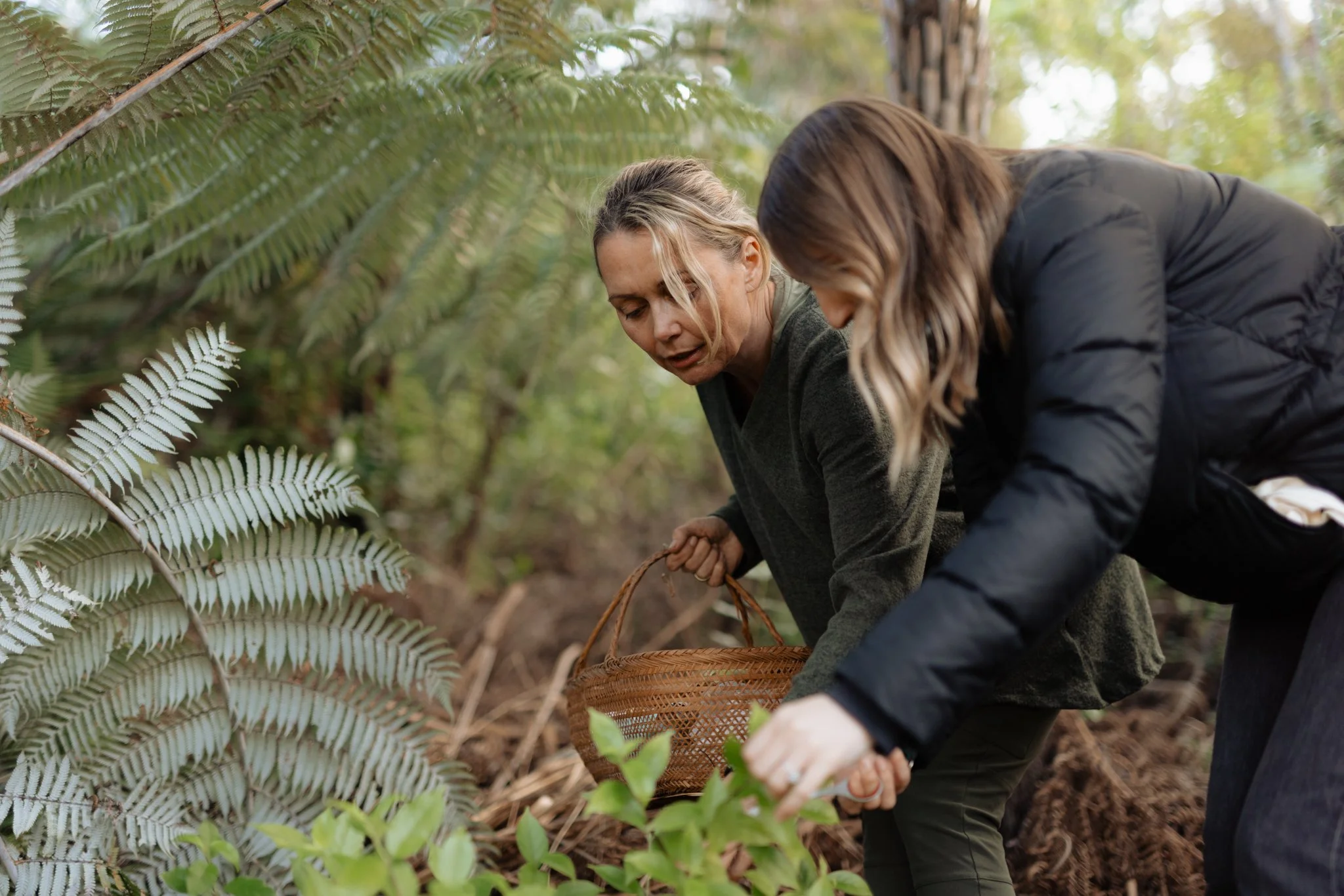
Mindful Harvesting at Velskov Food Forest
Ready to taste the wild side of Aotearoa?
Forage the forest firsthand on the Nourishing Nature experience at Velskov Forest Farm.
Guided by experts in the Waitākere Ranges, you’ll forage for native plants like the magnificent Mamaku, discover traditional rongoā uses, and taste wild flavours. The half-day retreat includes an interactive foraging walk, a native tree planting, and a fire-cooked lunch paired with artisan local produce in an open-air forest glasshouse.
How to Book: Tours run every Wednesday and advanced bookings are essential. Book a small group tour here or a private tour here.
Stay tuned for the next instalment in our native plant ‘Foraging New Zealand’ series, where we'll be exploring another native botanical treasure.
A Note on Mindful Harvesting
Mamaku Tree ferns play a vital role in maintaining the delicate microclimate of the forest floor. When foraging for Mamaku in the wild, always select single, mature frond stems from established trees rather than targeting young plants. Taking only what you need helps these forest giants thrive for generations to come. Before gathering wild flora in Aotearoa New Zealand, please follow these core safety rules:
100% Positive ID: Only harvest plants you can accurately identify to avoid dangerous lookalikes.
Respect Tikanga & Rongoā: Native species are taonga (treasures). Honour local protocols, respect rāhui (prohibitions), and forage with cultural awareness.
Mindful Harvesting: Use the 1/10th rule and never take more than 5-10% of a plant group. For Mamaku, harvest only single mature frond stems, leaving young plants and the crown intact.
Check Legal Rules: Harvesting on DOC land, in National Parks, or in nature reserves is illegal without permits. Always seek permission for private land and check council bylaws for public spaces.
Avoid Contaminants: Do not forage within 10 meters of roads, sprayed areas, industrial run-off, or dog parks.
Test Sensitivity: To check for allergic reactions, introduce new wild foods in tiny amounts first.
Disclaimer: This content is for educational purposes only and does not constitute medical or botanical advice.